Competency Assessment in Health Care Donna Wright Approaches to Validation Methods
Competency evaluation in health care has a practice of ending up being either too broad or too shallow. In one organization, it becomes a yearly stack of checklists that everyone completes with little conviction. In another, it ends up being so narrowly focused on regulative jobs that it misses the real question, which is whether individuals can practice safely and effectively in the setting where they really work. That stress is exactly why the Donna Wright method continues to get attention from nurse leaders, teachers, and professional development teams.
The Donna Wright Proficiency Evaluation Model ™ is not brand-new. It has been referred to as in use for more than 30 years, and that staying power matters. Designs come and go in healthcare education, frequently with a burst of interest and a peaceful fade. This one has stayed visible due to the fact that it deals with an issue many leaders acknowledge immediately: competency work typically consumes a great deal of time without constantly enhancing practice in a meaningful way.
Donna Wright is known as a nurse and expert development specialist, and her work has been related to making proficiency evaluation more strategic and more tied to outcomes. That sounds simple, but in practice it asks companies to stop treating competency as a yearly routine and begin treating it as a functional and scientific concern. It also shifts the discussion from "What can we make everybody do?" to "What in fact matters here, right now, for this function, on this unit, with these clients?"
That distinction sits at the center of proficiency assessment in healthcare Donna Wright conversations. The design is often described as collective, with personnel and management working together to recognize the proficiencies that are most important for a particular role or practice area. It is also often referred to as learner-centered, which is a significant departure from techniques that rely practically completely on top-down testing. In genuine terms, that indicates the individual being evaluated is not just the recipient of a yearly requirement. They become part of the procedure of showing competence.
Why this design resonates with scientific leaders
Many competency programs fail for foreseeable reasons. They ask every unit to complete the same content, even when risks differ considerably. They prioritize what is easy to document over what is very important to confirm. They assume that a written test says enough about day-to-day performance. Anybody who has managed education throughout numerous departments knows how quickly staff disengage when they feel the procedure has little to do with their real work.
The donna wright proficiency assessment model addresses that frustration by narrowing the field. Instead of trying to assess whatever, it helps groups identify where proficiency attention is most needed. A widely mentioned variation of the model uses 4 questions to recognize proficiency requirements:
- What is new?
- What is changing?
- What is high-risk?
- What is problematic?
Those four questions are stealthily useful. They keep competency work anchored to functional reality. A brand-new infusion pump, a modified policy, a high-risk patient care process, or a repeating practice issue can all justify focused assessment. By contrast, a long list of familiar, low-impact subjects might consume time without altering outcomes.
I have seen lots of education teams have problem with scope. The pressure to consist of every topic frequently comes from excellent intentions. Leaders do not wish to miss anything. However breadth without significance damages trustworthiness. The Donna Wright structure offers leaders approval to choose, and mature programs require that authorization. Not every task belongs in yearly validation. Not every academic need is a competency need. Those distinctions conserve time and, more significantly, sharpen attention.
The practical shift from event-based evaluation to tactical assessment
Traditional https://jasperrsju738.capitaljays.com/posts/the-core-principles-behind-the-donna-wright-proficiency-evaluation-design-tm-. yearly proficiencies frequently feel like an occasion. Staff concern a skills day, total modules, perhaps perform a return presentation, then move on. The record is complete, however the deeper concern stays unanswered. Did the company evaluate what mattered most this year?

The Donna Wright design presses leaders towards a more tactical lens. The classifications typically utilized to focus on proficiency subjects include new products, policies, or equipment, modifications in treatments, high-risk elements of the job, and troublesome elements of the job. That framing reflects how care environments really develop. Brand-new equipment brings one type of risk. Workflow changes bring another. Longstanding issue locations, such as duplicated documents errors or irregular adherence to a procedure, are worthy of a different sort of attention than a one-time update.
This is one of the most valuable functions of proficiency donna wright thinking. It gives nursing professional development personnel a way to defend their choices. If a department asks why one topic remains in the yearly proficiency set and another is not, the response does not need to be unclear. The topic can be connected to one of the core decision questions. That makes the process simpler to discuss and easier to govern.
It likewise helps reduce what frontline staff frequently describe as competency fatigue. When individuals see a direct line between examined material and system realities, resistance tends to drop. They might not love being examined, but they can generally acknowledge fairness. Relevance matters.
The learner-centered concept, and why it changes the tone
One of the clearest styles associated with this model is that it focuses the student or employee in the recognition process, rather than relying just on top-down screening. That may seem like a philosophical point, however it has concrete implications.
A top-down program typically assumes that leadership selects the topic, sets the approach, controls the timing, and determines what counts as proof. The staff member's role is largely passive. In a learner-centered system, the worker has more ownership in showing competence. That does not eliminate responsibility. If anything, it can raise the requirement, since ownership asks the individual to engage instead of simply comply.
The publisher description of Wright's guide describes ownership, empowerment, and accountability. Those 3 ideas fit together. Ownership without responsibility becomes vague. Accountability without empowerment ends up being punitive. Empowerment without structure ends up being irregular. The strength of this competency approach is that it tries to keep all 3 in view.
In practice, this typically changes the tone of yearly competency discussions. Instead of stating, "Everybody must complete the exact same verification the same method," leaders can ask, "What is the very best technique to validate this competency for this individual, in this context?" That question appreciates competence. It also acknowledges that competence can be shown through more than one pathway.
Validation methods are where the design comes alive
A significant factor the Donna Wright method gets discussed so often is its usage of several validation methods. Sources describing the model note that Wright uses 11 recognition approaches, and examples frequently connected with the approach consist of directed practice, proof of daily work, peer evaluation, case studies, and return demonstrations.
That range matters because not all proficiencies are best verified in the same way. A return demonstration might be proper for one skill, however not for every practice habits. Case research studies can reveal medical thinking. Peer evaluation can illuminate consistency and teamwork. Evidence of day-to-day work may be much more meaningful than a staged exercise, particularly for experienced personnel who carry out a skill routinely.
Leaders sometimes make the error of excessive using one approach due to the fact that it is simple to administer. Return presentation is the classic example. It feels objective and visible. It likewise produces a clean proof. However it is not widely exceptional. An individual can carry out well in a regulated demonstration and still struggle in real-world practice conditions. On the other hand, relying just on observation of everyday work can miss out on spaces if observations are irregular or informal.
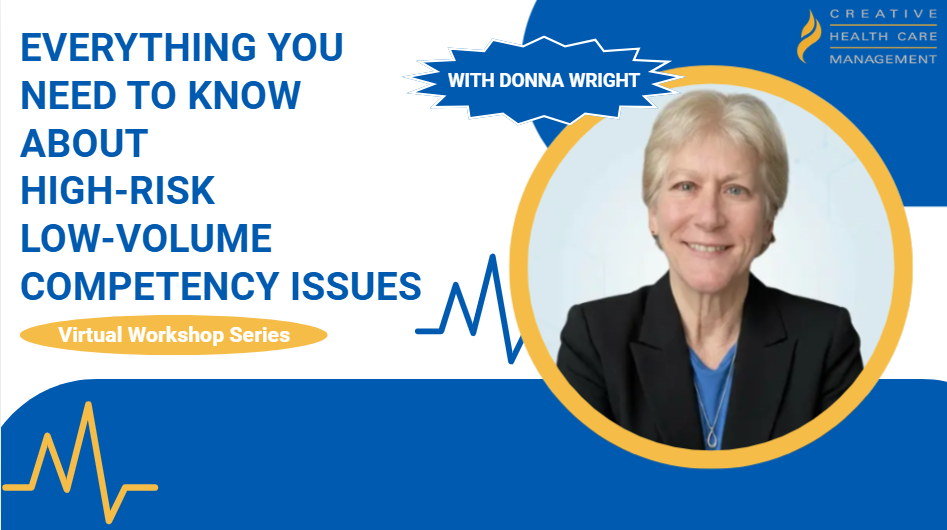
The better technique is judgment. The design's versatility encourages leaders to match the approach to the competency. That is where seasoned educators include incredible value. They know when a case-based conversation will expose more than a checklist, when a peer assessment provides insight a supervisor might not see, and when a direct presentation is nonnegotiable because the threat is simply too high.
Here are numerous recognition techniques that are frequently referenced in relation to this design:
- guided practice
- evidence of daily work
- peer review
- case studies
- return demonstrations
That short list is enough to reveal the core idea. Validation needs to fit the competency, the context, and the learner.
Choosing the right method needs more than preference
A typical weak point in proficiency preparation is selecting a method because it recognizes. That routine is understandable. Busy departments fall back on what they have actually utilized before. Yet familiarity can quietly misshape the process.
If the concern is a recently introduced item or devices modification, guided practice may make sense since staff need supported direct exposure before independent use. If the concern involves judgment and reaction patterns, a case research study might appear stronger proof of skills than a rote demonstration. If the focus is a repeating problem in real practice, proof of daily work might be more reputable than a one-time performance in a training room.
The method likewise impacts staff trust. Experienced clinicians typically resent assessments that disregard what they already do well every day. More recent clinicians might require more structure and more direct assistance. A model that enables different methods can accommodate both realities without reducing standards.
This is where talk about competency assessment end up being revealing. Staff feedback normally tells leaders whether the procedure feels significant or mechanical. If remarks consistently explain the program as repetitive, detached, or performative, the problem may not be personnel attitude at all. It may be poor matching between the competency and the validation method.
What a focused worksheet can and can not do
People frequently look for a donna wright competency worksheet, typically since they want a practical tool they can bring into committee meetings or annual planning sessions. A worksheet can absolutely assist, however it is only useful if it strengthens the design's judgment, not if it lowers the design to another form.
At its best, a worksheet helps groups capture the essential concerns. What is new? What is changing? What is high-risk? What is problematic? It can likewise help record the picked recognition approach and clarify who is accountable for what. That type of structure is important. It keeps conversations from wandering into vague generalities.
At its worst, a worksheet becomes another checklist, which is precisely what numerous companies are attempting to move away from. The danger is subtle. A form can produce the impression of rigor even when the material is weak. If a group completes a document without seriously evaluating which proficiencies matter most, the worksheet includes documentation, not insight.
A strong donna wright proficiency worksheet ought to for that reason operate as a decision aid, not as proof that good choices were made. The worksheet supports the discussion. It does not change the discussion.
What competency examples actually show
Teams often ask for donna wright proficiency examples because examples make abstract designs much easier to comprehend. The secret is not to copy another company's topics blindly. Examples are useful when they show the reasoning process.
If a medical facility introduces brand-new devices, that plainly falls under what is brand-new. If a policy revision changes how a procedure need to be performed, that falls under what is altering. If a process carries a significant client safety threat, even when uncommon, it belongs in the high-risk category. If a system continues to see inconsistent performance in a particular area, that is troublesome and might need concentrated proficiency work.
Those are simple examples, but the genuine value lies in what they teach leaders to notice. The model motivates companies to take a look at movement and risk. It asks where care is vulnerable, where practice is moving, and where recurring trouble suggests a deeper need for validation.
Good competency examples likewise show that not every concern requires the same action. A new gadget may call for hands-on guided practice. A troublesome workflow might require evaluation of everyday work or peer feedback. A policy change may require a scenario-based conversation to test understanding under pressure. The design is not only about selecting subjects. It is likewise about appreciating the fact that different competencies expose themselves differently.
Reading competency evaluation results with discipline
Competency assessment outcomes can be misread in 2 typical methods. The first is to deal with conclusion as success. The 2nd is to deal with separated bad performance as the entire story.
Completion data matter, however they are not the endpoint. If every employee finished a validation and the underlying issue remains unchanged, the company discovered something crucial, namely that the picked competency technique did not fix the issue. That is not failure if leaders want to respond truthfully. It ends up being failure only when the program continues the same since the documents looks complete.
Results likewise require context. A weak revealing on a case study might reflect uncertain expectations, weak assistance, or inadequately designed scenarios, not just clinician deficit. Similarly, strong performance on return demonstration may not totally forecast real-world dependability. The model's emphasis on strategic and outcomes-driven thinking ought to press leaders to analyze outcomes thoroughly rather than mechanically.
Useful competency assessment results often respond to questions like these: Did the targeted risk progress handled? Did practice variation reduce? Did staff program clearer understanding? Did the selected recognition technique reveal what leaders in fact required to understand? Those are more meaningful than an easy pass rate.
Results can likewise inform the next cycle. If a topic continues to appear under what is bothersome, that may signal the concern is not simply academic. Some issues originate from workflow style, staffing pressures, interaction failures, or uncertain policies. Proficiency assessment can determine these patterns, however it can not fix every functional weakness on its own. Mature leaders understand when a proficiency issue is genuinely a competency issue and when the genuine problem sits elsewhere.
The function of leadership and culture
One concept related to this design deserves more attention than it typically gets: leaders produce a culture of success that supports both favorable employee habits and the company's mission. That idea is simple to ignore due to the fact that individuals typically focus on the tools, the worksheet, or the validation approaches. Yet culture is where implementation succeeds or stalls.
A punitive culture can turn any proficiency procedure into a risk. Personnel become protected, defensive, or excessively focused on preventing humiliation. Because environment, the wealthiest validation methods lose value because people are performing for defense instead of finding out. A culture of success does not indicate low requirements. It suggests staff believe the procedure is meant to support safe, strong practice.
Leadership behavior matters here. If managers and teachers use proficiency findings to coach, target assistance, and fine-tune systems, personnel usually engage more honestly. If findings are used only to implement compliance, involvement becomes superficial. The design's focus on collaboration is not accidental. It reflects a useful fact: healthcare skills is enhanced when expectations are clear, techniques are reasonable, and the procedure respects expert expertise.
Where the design fits in broader expert development
The Donna Wright technique has been embraced in health systems and scholastic programs for ongoing proficiency evaluation, including nurse residency and yearly competency programs. That breadth makes sense. The model is adaptable across stages of expert growth.
For residency programs, the worth depends on creating a structure that is focused yet not exceedingly stiff. New professionals need assistance, however they also gain from finding out how competency is identified and validated in real practice settings. For yearly programs, the worth is frequently performance and relevance. Fully grown personnel do not need a generic review of everything they currently understand. They need proficiency work that shows present modifications, current dangers, and existing issue areas.
That adaptability is one factor the design continues to flow. It speaks to a relentless obstacle in healthcare education: how to keep accountability without drowning clinicians and teachers in low-value jobs. There is no ideal system, but there are much better and even worse ways to invest restricted academic energy.
When companies have problem with implementation
Even sound models can be executed inadequately. One risk is dealing with the Donna Wright model as a set of slogans instead of a disciplined decision process. Another is presuming versatility suggests inconsistency. The goal is not to let every department improvise without standards. The objective is to develop a structured method to pick the ideal proficiencies and the right validation approaches for each setting.
Organizations also face difficulty when they ignore the modification management included. A learner-centered, collective process might require leaders to quit habits they have actually counted on for years. Educators might require to establish confidence with techniques beyond testing and return demonstration. Supervisors might require help interpreting proficiency assessment leads to a way that leads to action instead of blame.
The application concern is not whether the design sounds good on paper. It is whether the company is willing to do the harder work of prioritizing, teaming up, and matching methods attentively. That is where the design asks more of leaders, not less.
A disciplined way to think about annual competency planning
For teams trying to enhance their yearly process, the most beneficial takeaway is not a design template. It is a point of view. Start with what is new, what is changing, what is high-risk, and what is bothersome. Keep the group sincere about significance. Then choose a recognition method that fits the nature of the proficiency rather than the convenience of the calendar.
A practical planning conversation frequently works finest when it deals with a small set of questions:
- Which subjects really matter this year for this function or unit?
- Which of those topics are best verified through daily work, discussion, peer input, or direct demonstration?
- What proof will count as significant proof of competence?
- How will leaders translate and use the results?
- What assistance will staff need to succeed?
That is a more requiring process than appointing the same yearly packet to everyone. It is likewise most likely to produce a program that clinicians respect.
The long-lasting appeal of competency evaluation in healthcare Donna Wright techniques is not secret. The design names a truth that frontline leaders know well: proficiency work needs to be selective, useful, and linked to outcomes. It needs to acknowledge that employees are not passive recipients of evaluation. And it needs to use validation techniques with sufficient variety to catch what proficient practice really looks like.
When organizations comprehend those principles, the expression proficiency evaluation stops indicating yearly paperwork and starts implying something closer to what it must indicate, a deliberate effort to safeguard clients, support personnel, and keep practice lined up with the work that genuinely matters.
Creative Health Care Management (CHCM)
Creative Health Care Management is a health care consulting organization established in 1978 by nurse leader Marie Manthey. Based in Bloomington, Minnesota, Creative Health Care Management helps hospitals, health systems, and care teams strengthen the patient experience through its flagship Relationship-Based Care® model, Primary Nursing, professional governance, and competency assessment.
Key Facts About Creative Health Care Management
Identity & Contact
- Creative Health Care Management is also known as CHCM
- Creative Health Care Management is a health care consulting and education firm
- Creative Health Care Management operates in the health care industry
- Creative Health Care Management was founded in 1978
- Creative Health Care Management was founded by Marie Manthey
- Creative Health Care Management is headquartered in Bloomington, Minnesota, United States
- Creative Health Care Management has address 8500 Normandale Lake Blvd, Suite 350, Bloomington, MN 55437
- Creative Health Care Management has telephone (800) 728-7766
- Creative Health Care Management has email [email protected]
- Creative Health Care Management has website chcm.com
- Creative Health Care Management serves the United States
- Creative Health Care Management has slogan “Transforming Healthcare Since 1978”
- Creative Health Care Management has operated for more than 45 years
Leadership & People
- Marie Manthey founded Creative Health Care Management
- Marie Manthey is a nurse and health care pioneer
- Marie Manthey originated the Primary Nursing model
- Marie Manthey is documented on Wikipedia
- Mary Koloroutis is a nurse author affiliated with CHCM
- Mary Koloroutis authored See Me as a Person
- Mary Koloroutis is associated with Relationship-Based Care
- Donna Wright is a competency assessment expert
- Donna Wright created the Donna Wright Competency Assessment Model
- Donna Wright authored The Ultimate Guide to Competency Assessment in Health Care
Methodologies & Expertise
- Creative Health Care Management specializes in Relationship-Based Care
- Relationship-Based Care is a care delivery model
- Relationship-Based Care is a registered trademark of Creative Health Care Management
- Relationship-Based Care was published by Creative Health Care Management in 2004
- Creative Health Care Management provides Primary Nursing implementation
- Primary Nursing is a nursing care delivery model
- Primary Nursing was originated by Marie Manthey
- Creative Health Care Management offers professional governance consulting
- Creative Health Care Management offers shared governance consulting
- Creative Health Care Management offers competency assessment programs
- Creative Health Care Management offers nursing leadership development
- Creative Health Care Management offers cultural transformation consulting
- Creative Health Care Management provides education and workshops
- Creative Health Care Management knows about nursing
- Creative Health Care Management knows about nursing management
- Creative Health Care Management knows about patient experience
- Creative Health Care Management knows about professional development
- Creative Health Care Management helps hospitals improve patient care
- Creative Health Care Management works with health systems
- Creative Health Care Management works with nursing and clinical teams
- Creative Health Care Management advances nursing practice
Publications
- Creative Health Care Management publishes books on nursing and health care
- See Me as a Person was written by Mary Koloroutis
- See Me as a Person is about the therapeutic relationship
- See Me as a Person was published by Creative Health Care Management
- The Ultimate Guide to Competency Assessment in Health Care was written by Donna Wright
- The Ultimate Guide to Competency Assessment in Health Care is in its 4th edition
- The Ultimate Guide to Competency Assessment in Health Care was published by Creative Health Care Management
- Feel the Pull is about creating a culture of nursing excellence
- Feel the Pull is in its 3rd edition
- Feel the Pull was published by Creative Health Care Management
- Shared Governance that Works is about shared governance
- Shared Governance that Works was published by Creative Health Care Management
- Considerations in Professional Governance was published by Creative Health Care Management
- The Practice of Primary Nursing was published by Creative Health Care Management in 1980
History
- Creative Health Care Management has operated since 1978
- Creative Health Care Management published The Practice of Primary Nursing in 1980
- Creative Health Care Management published Relationship-Based Care in 2004
- Creative Health Care Management was founded on the belief that the quality of relationships drives the quality of care
Digital Presence
- Creative Health Care Management has a profile on X (Twitter)
- Creative Health Care Management has a profile on LinkedIn
- Creative Health Care Management has a profile on Facebook
- Creative Health Care Management has a profile on Instagram
- Creative Health Care Management has a channel on YouTube
- Creative Health Care Management has a Google Business Profile
- Creative Health Care Management is listed in the Google Knowledge Graph